

Due to the prolonged pandemic, our lives are restricted in many ways every day. At the same time, however, it’s also true that this situation has accelerated the growth of various new digital technologies. Even unfamiliar concepts such as virtual reality (VR), augmented reality (AR), and the metaverse are rapidly becoming part of our daily lives.
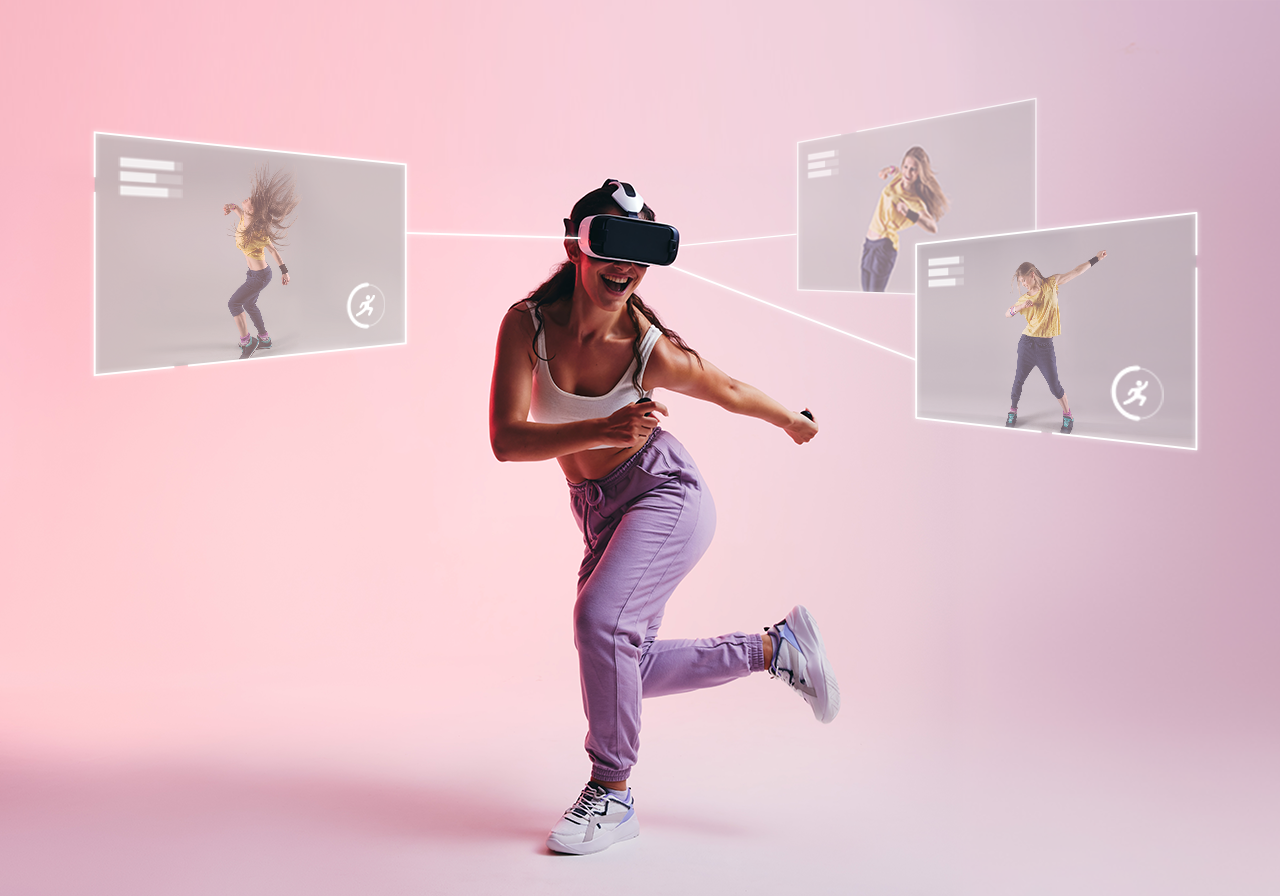
Take Emma, for example, who lives in Canada and is an avid K-pop fan. After learning K-pop cover dance moves through YouTube, she now wishes to take professional choreography lessons at a studio run by a popular dancer in Korea. As it’s difficult to visit Korea in person, what if there was an opportunity to participate in a class in the metaverse? With a camera that can recognize 3-dimensional information, Emma is one step closer to making her wish a reality.
If a smartphone camera equipped with 3D-sensing capabilities recognizes Emma’s dance movements from head to toe, then the teacher in Korea can provide feedback and coaching on his moves in real time. In addition, when Emma puts on the VR headset, she can virtually experience being in the class in Korea along with the choreography instructor and other students.
Then, there’s Oliver, who’s in charge of shipping at a logistics company. The development of metaverse technology will allow him to do his work faster and more efficiently. For instance, let’s say Oliver captures the delivered items with a 3D-sensing camera and transmits them to the company’s cloud. The central management system will then recognize the length, width, and volume of the packages and arrange for them to go to the on-site warehouse or put onto the delivery vehicles. This will help out Oliver greatly in terms of estimating the amount of space needed for loading, and figuring our shipping and delivery schedules.
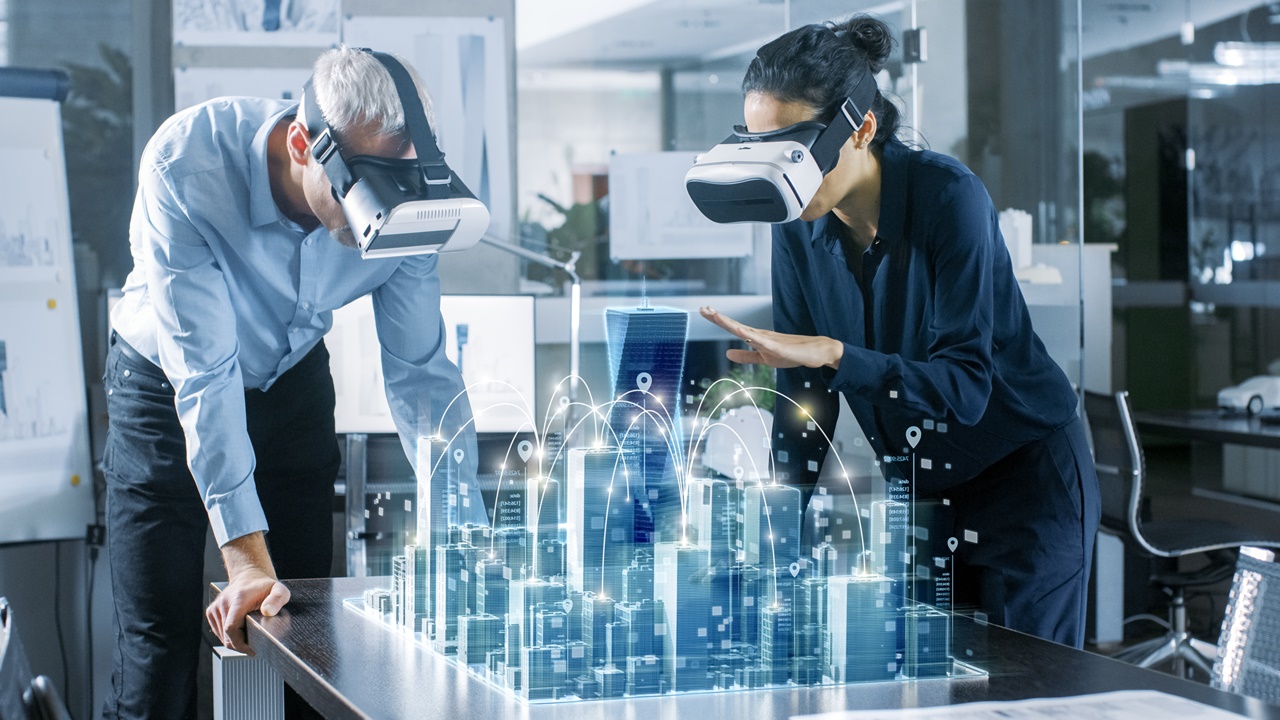
Like these scenarios above, the metaverse—in all its various capacities—is full of infinite possibilities, even beyond what we can imagine. Unlike the existing digital world where there are clear boundaries of reality and limited means of communication, the metaverse allowing for borderless connections and immersive experiences is a huge advantage. However, this sense of transcendence, due to the blurred boundary between the virtual and real, paradoxically stems from precise spatial mapping. Only by depicting reality in a truly tangible way can it blend naturally into the virtual space. If that’s the case, what kind of technology, which accurately recognizes real-life data, is needed to make the metaverse truly immersive?
ToF Module for 3D-Sensing - “Digital Eye” in the Metaverse era
As the above cases demonstrate, shaping accurate and realistic 3-dimensional environments is essential to making the metaverse a truly immersive platform. The demand for 3D-image-processing and image-sensing technologies is increasing steadily. According to Research and Markets, the global 3D-sensor market size is projected to grow from USD 2.9 billion in 2020 to USD 10.0 billion by 2025, at a compound annual growth rate (CAGR) of 27.9%.
The ToF (time of flight) module is crucial for 3D-sensing technology. It can render the virtual space within the metaverse in a manner almost identical to the real world. Considered the “eye” of the metaverse era, the ToF module recognizes real objects and makes them virtual, allowing 3D-sensing technology to mirror reality more authentically, heightening the metaverse experience.
ToF modules recognize 3-dimensionality, spatial information, and object movement by measuring the time it takes for light to bounce back of an object. Since the existing distance-estimation technology of the camera calculates the distance to an object based on a flat surface, current methods will have limitations in uneven places, and in dark environments. However, 3D-sensing based on ToF enables accurate 3D measurement as the module can detect the size and volume of irregular shapes such as circles and curved surfaces, derive absolute values rather than relative values, and is largely unaffected by ambient brightness.
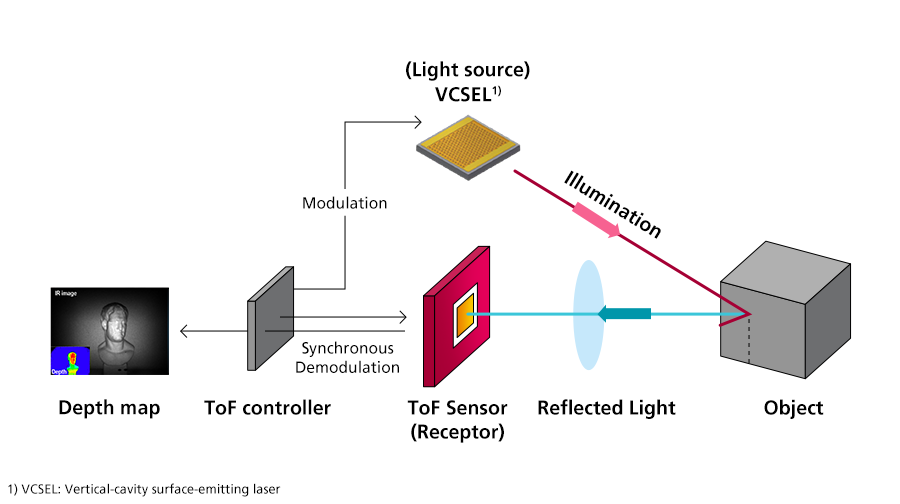
[The time-of-flight (ToF) principle] ToF is a method of measuring the distance between the sensor and the object based on the time difference between the emission of a signal (from the light source) and its return to the sensor, after being reflected by an object.
When a camera equipped with a ToF module is applied to a smartphone or wearable device, biometric authentication, motion recognition, AR and VR functions can be implemented. In addition, as metaverse-related killer apps appear, a new ecosystem for 3D-sensing cameras is created, and the utilization of the ToF camera module is expected to increase even further.
LG Innotek partners with Microsoft on Metaverse and the Cloud
In 2021, LG Innotek signed an MOU with Microsoft to cooperate in the development and supply of ToF modules, a 3D-camera component for Azure, with the mutual goal of bringing the product to market by August of this year. Azure, Microsoft's cloud platform, is a well-known solution, currently occupying approximately 20% of the global cloud market. LG Innotek plans to develop and mass-produce ToF modules for Azure together with Microsoft in addition to supplying the modules to Microsoft's global cloud customers.

The technology has several applications across a long list of industries. For example, a fitness company can implement a ToF module in its wearable device and link it to the Azure cloud. The resulting product can provide fitness services combining AR/VR with detailed tracking of an individual’s movements. LG Innotek and Microsoft will also work together to grow the ToF-module customer base as this technology is expected to receive significant interest from fields such as global healthcare and distribution markets. Already participating in the B2B metaverse market, Microsoft is laying the groundwork for further expansion into B2C. The scope of cooperation between the two companies is expected to grow with this new foray into the B2C content-based metaverse market.
LG Innotek is a leader in the 3D-sensing market based on its world-class camera module technology and business know-how. In 2019, LG Innotek launched the 3D-sensing brand “InnoXensing,” leading the 3D sensing module market. “InnoXensing” is a combination of the words “innovation,” “X” (from “eXcellent,” “eXtream,” and “eXperience”), and “sensing” from 3D sensing. As the metaverse continues to evolve, LG Innotek will continue to support immersive experiences and inspiring customers with differentiated 3D-sensing technology.

LG Innotek


E1/E3, 30, Magokjungang 10-ro, Gangseo-gu, Seoul, 07796, Republic of Korea
You are receiving this email because either you are a customer of LG Innotek or you have signed up to
receive marketing emails. If you received this in error, please unsubscribe.
Copyright © 2026 LG Innotek. All rights reserved.