

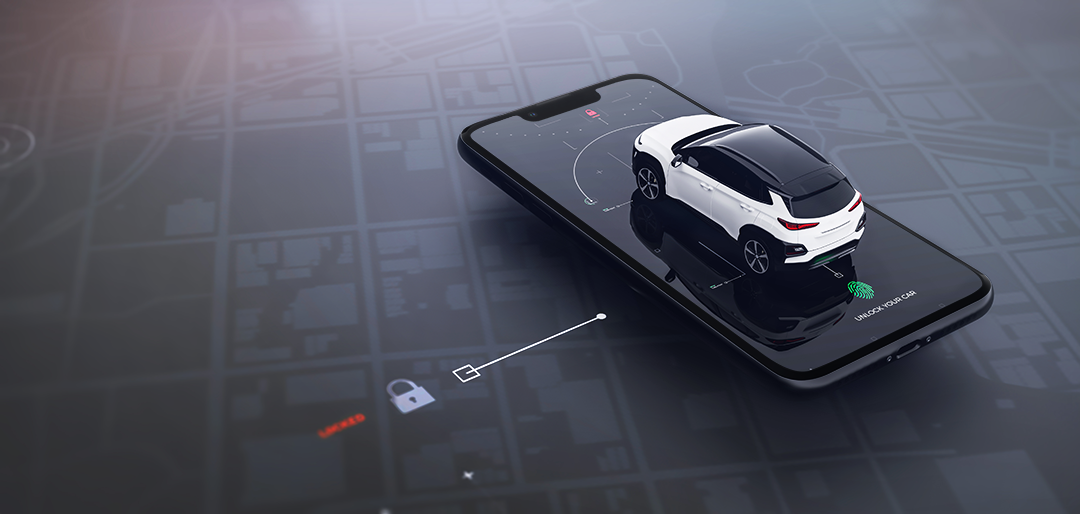
Smartphones and IoT technologies are making our lives more convenient. However, security implications and the lack of adequate precision-positioning technology meant their application in digital keys has been limited. UWB (Ultra-Wideband) and BLE (Bluetooth Low Energy) technologies can help enhance vehicle security systems and better locate the position of a device (or its user). Incorporated as smartphone apps, the digital key can lock, unlock, and start vehicles.
Unlike conventional smart keys, digital keys can also control vehicle systems via smartphone. The UWB technology allows digital keys to locate smartphone users accurately to deliver various services and resolve fundamental issues such as vehicle theft through a relay attack.
The digital key was initially a safety and convenience feature for high-end luxury cars but is now becoming available to mainstream vehicles. Market research firm Strategy Analytics predicts that the number of digital key-applied vehicles will increase more than 4.5 times, from 6.3 million in 2020 to 28.9 million in 2025.
Digital keys are replacing physical car keys
There have been numerous attempts in the past to implement the digital key to control air conditioning and heating before getting into the car or to assess tire pressure conditions and fuel efficiency remotely. There were concerns about its vulnerabilities to potential vehicle theft, but the advancements in UWB and BLE technologies mean smartphones can now control the vehicle system more securely and conveniently. Furthermore, the growth in car sharing and rental markets goes hand in hand with the demand for safer digital keys. Market research firm Statista predicts that the global vehicle sharing market will grow 6.28 percent annually, reaching 60.7 million users and $16.52 billion in profits by 2026.
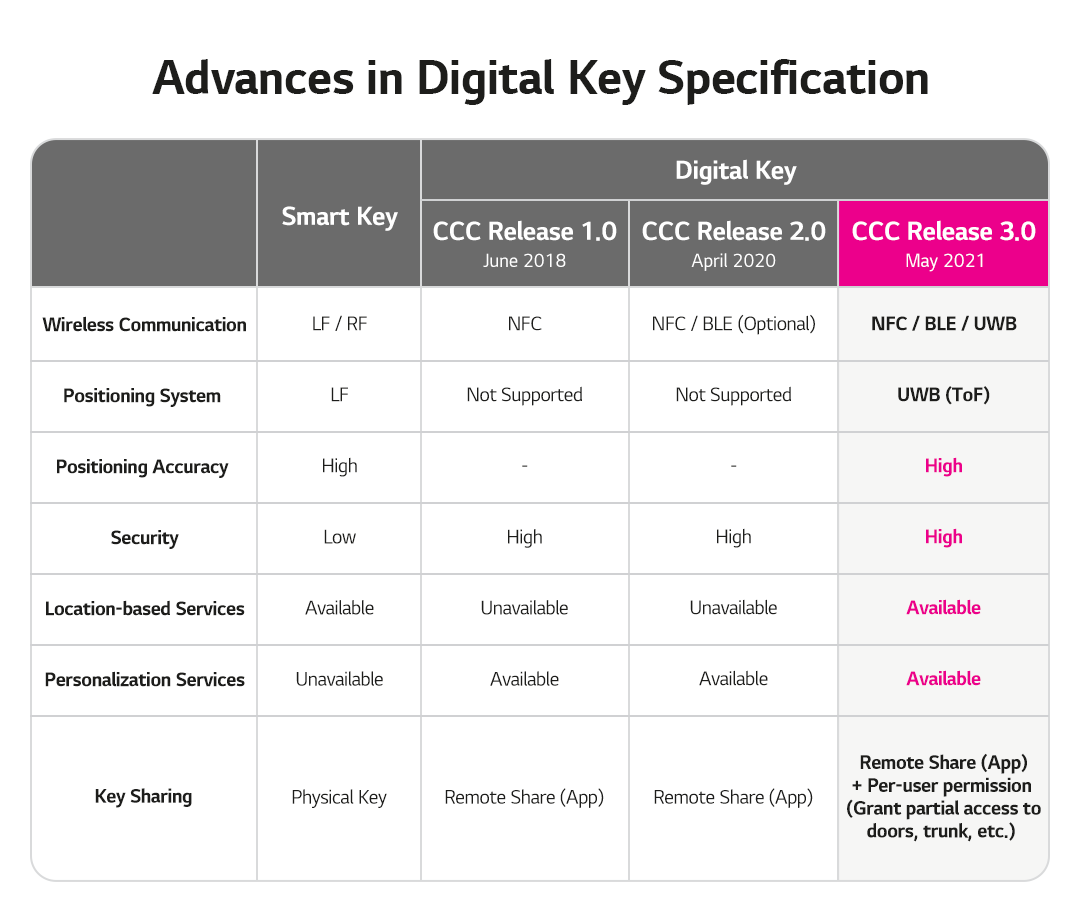
With the transition of car ownership into car sharing, we are also making advancements in car key-sharing technologies. Car owners could unlock or start their vehicle with conventional smart keys based on LF (Low Frequency) and RF (Radio Frequency) telecommunication technologies, albeit only in close proximity, but they could not simultaneously share their keys with other vehicle users.
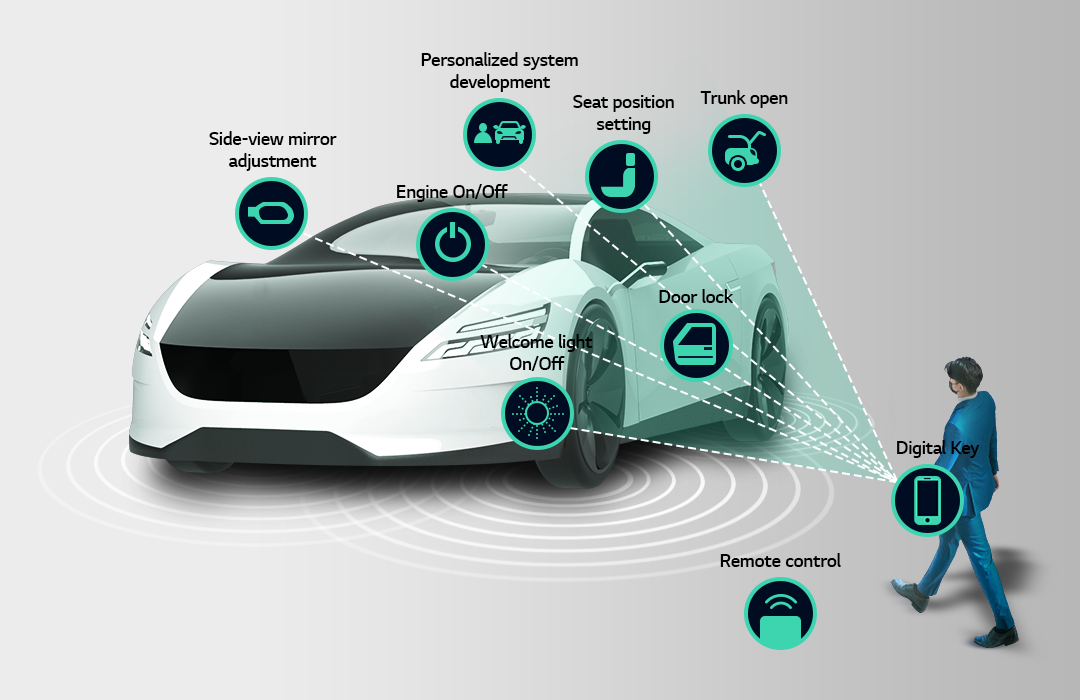
In contrast, a digital key can be shared via smartphone app safely and efficiently, using Near-Field Communication (NFC), UWB, and BLE technologies. You can even allow access to specific vehicle-system features, such as unlocking the trunk. Not having to carry a physical key means you won’t lose it, and there’s also little room for vehicle theft because you can't drive unless the smartphone with a digital key is physically inside the vehicle.
The possibilities are endless in expanding innovative services for drivers by combining smartphones and digital UX in vehicles. You can remotely examine your vehicle mileage and tire pressure in real-time, or access personalized settings such as your preferred radio and music playlists via cloud. Shared cars can also be personalized for more convenience by automatically syncing each driver’s presets such as seat position.
Communication technology standards driving digital key innovation
The Car Connectivity Consortium (CCC), consisting of over 150 technology companies and automobile manufacturers worldwide, such as HKMC, BMW, LG, Apple, Samsung, VW, GM and NXP, governs standard specifications for digital key technology.
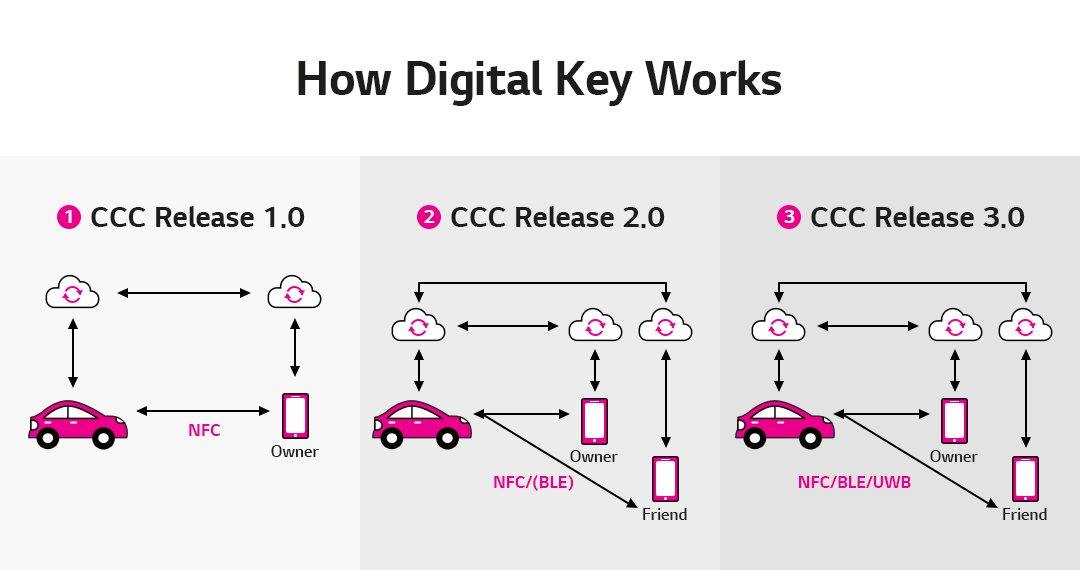
The Digital Key Release 1.0 specification that was first enacted in 2018 involved tagging a card key or smartphone key in close proximity using NFC. The Digital Key Release 2.0 specification enabled NFC or BLE to send control signals remotely and share a digital key with other drivers. Then, in 2021, the CCC enacted the Digital Key Release 3.0 specification that added location-aware features using NFC, UWB, and BLE to get more accurate locations of smartphone devices.
(Source: LG Innotek)
LG Innotek's Ultra-Small 'Digital Key Module' improves accuracy by 5X
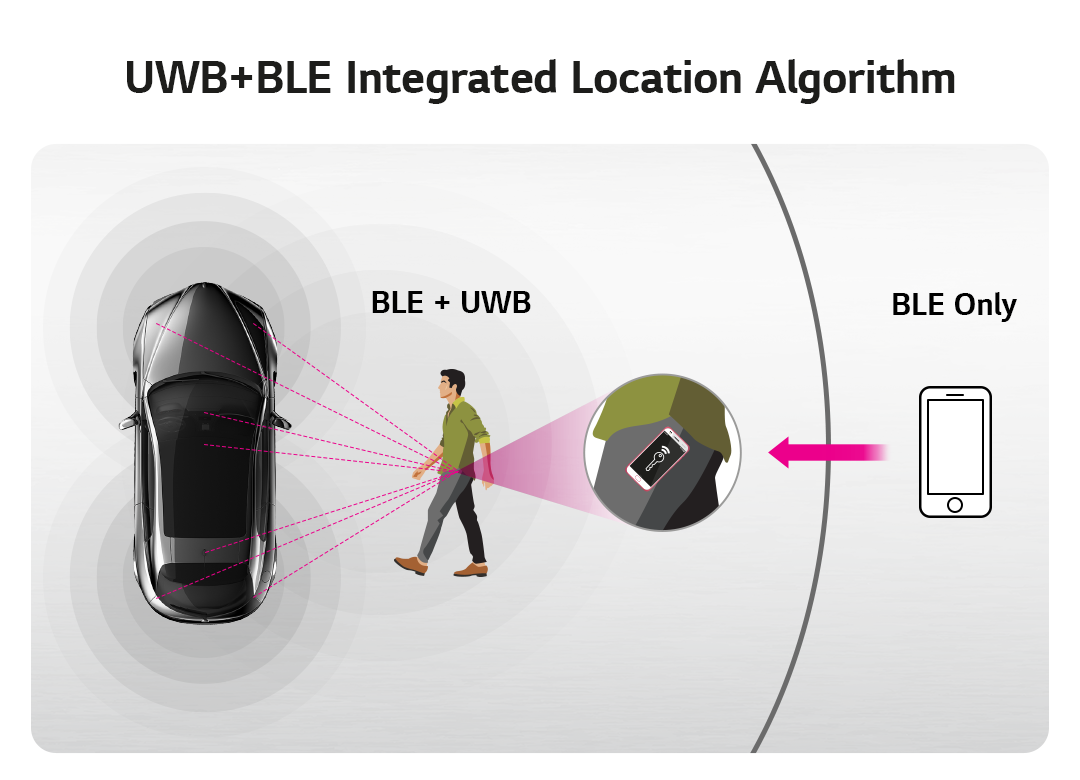
Essentially, the success of digital-key technology centers on improving positioning accuracy to capture the exact location of smartphone devices. LG Innotek's digital-key module uses UWB/BLE-based high-precision positioning algorithm to reduce the error range significantly (to a matter of centimeters rather than meters), improving its positioning accuracy by five times. For instance, the LG Innotek module can detect the location of a smartphone five meters away within a 10 cm error range, while other modules would have an error range of 50 cm.
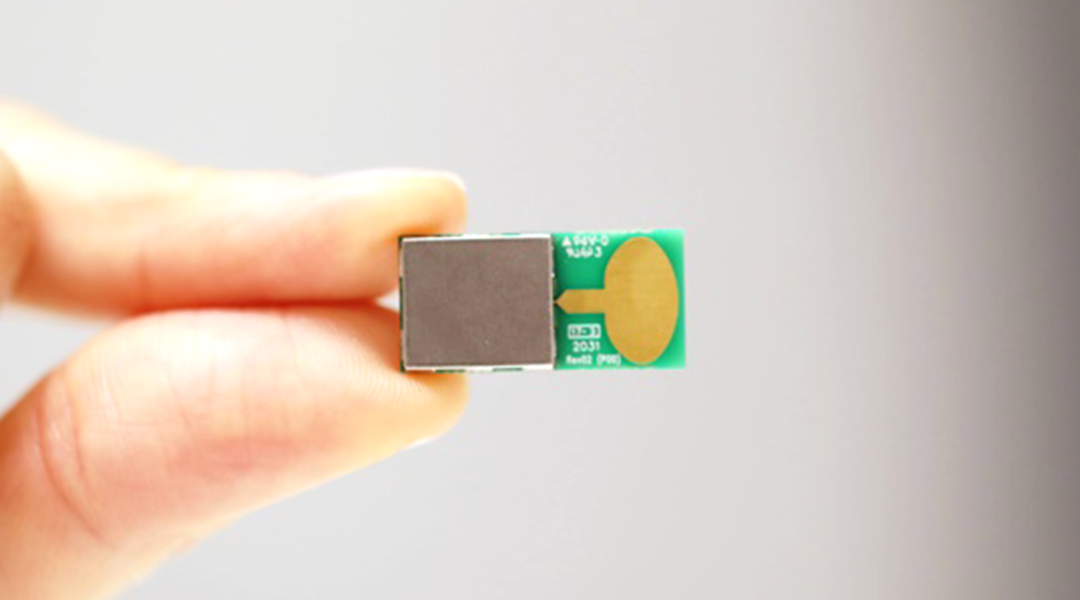
Thanks to LG Innotek’s ultra-precision high-integration technology, the paper clip-sized module is packed with over 60 components, such as radio frequency and power block, and can be installed anywhere inside and outside the vehicle.
LG Innotek's Advanced Digital-Key Technology
- The positioning algorithm accurately detects the real-time location of a smartphone using BLE and UWB communication, allowing for various location-based services to be delivered as the digital-key holder approaches the vehicle. The vehicle can offer convenience features such as automatically locking or unlocking the doors based on the key's location or switching on the light when it's dark. Ultimately, a more accurate positioning of the device opens the door to a wider variety of services for drivers based on their distance from the vehicle.
- Multi-BLE technology allows the installation of multiple BLE modules within the vehicle to ensure seamless service delivery regardless of the smartphone's location (i.e. stowed away in a pocket or bag). It features a handover technology that automatically switches to the BLE module best positioned to catch the smartphone signal, delivering service without interruption as the user moves around the vehicle.
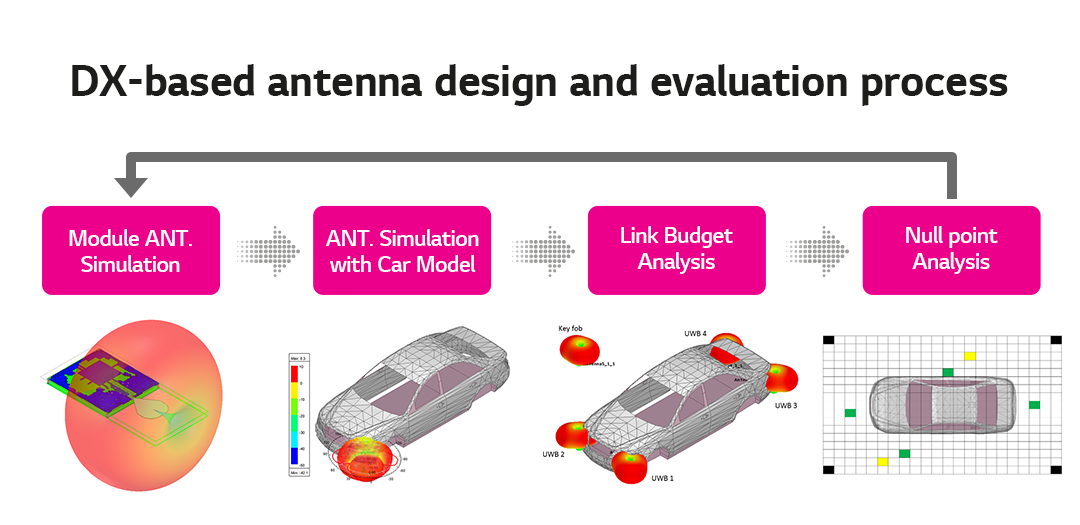
- DX-based antenna design allows car manufacturers to reduce the development time and costs by running a simulation. This predicts the optimal performance and size of the modules before production. The simulation can also predict how the modules will perform when they are mounted on the vehicle, which helps detect the optimal mounting position.
Digital keys are the centerpiece of implementing digital mobility services that increase customer value. As the vehicle-sharing market grows, innovation by car manufacturers and technology companies will combine wireless communication and smartphones to provide a convenient and enjoyable driving experience. LG Innotek plans to take the lead in reducing product development time and cost, and building a better user experience through ultra-small digital key modules based on advanced-positioning algorithms and simulations.

Related Articles
Key Enabler for Level 4 & 5 Autonomous Driving
4D Imaging RADAR
High-Performance Semiconductor Substrates for the Hyper-Connected
FC-BGA
3D-Sensing Technology Brings the Metaverse to Life
Even More Real than Real Life
LG Innotek


E1/E3, 30, Magokjungang 10-ro, Gangseo-gu, Seoul, 07796, Republic of Korea
You are receiving this email because either you are a customer of LG Innotek or you have signed up to
receive marketing emails. If you received this in error, please unsubscribe.
Copyright © 2026 LG Innotek. All rights reserved.